Which language-learning method solves which problem?
Apps, courses, tutors and self-study aren’t competing versions of the same thing. They provide different combinations of structure, interaction, explanation, repetition and exposure.
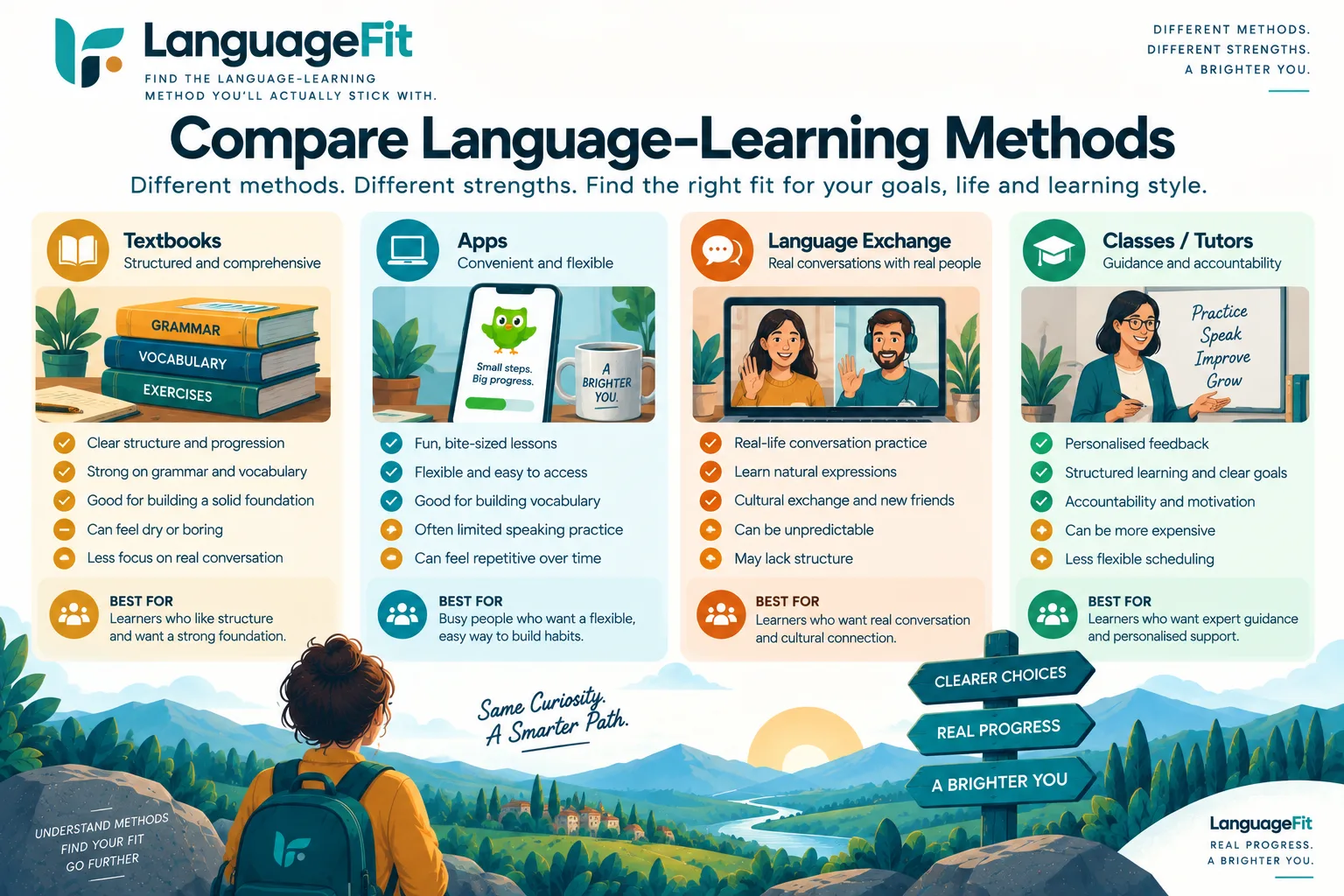
Choose based on the job you need done.
Short-form apps
Useful for: convenience, repetition and maintaining a habit.
Watch for: whether the depth and skills match your actual goal.
Structured courses
Useful for: sequence, broad coverage and fewer study decisions.
Watch for: enough practice in your priority skill.
Tutors & teachers
Useful for: feedback, interaction, correction and personalisation.
Watch for: cost, scheduling and teacher fit.
Conversation exchange
Useful for: real interaction and spoken retrieval.
Watch for: variable partner quality and less built-in structure.
Audio programmes
Useful for: listening and spoken-language emphasis.
Watch for: whether reading, writing or explanation also need support.
If reading feels easier than hearing speech, use the listening diagnosis.
Textbooks
Useful for: explicit structure, reference and explanation.
Watch for: how you’ll add enough listening and speaking.
Input-led learning
Useful for: comprehension and exposure through listening and reading.
Watch for: difficulty level and deliberate output where needed.
Self-directed mix
Useful for: flexibility and autonomy.
Watch for: skill gaps and resource overload.
Core + Gap + Enjoyment
You don’t need exactly three resources. The point is to give every resource a job.
Build a smaller resource system →